
✨ Banish Acne Scars: Why SkinPen Microneedling is a Safe, Long-Term Solution in Bristol
If you are in Bristol and searching for a solution to persistent acne scars, you've likely encountered a dizzying amount of treatments, from topical creams to aggressive laser procedures. Finding a treatment that is both effective and safe for your skin type requires honest information and realistic expectations.
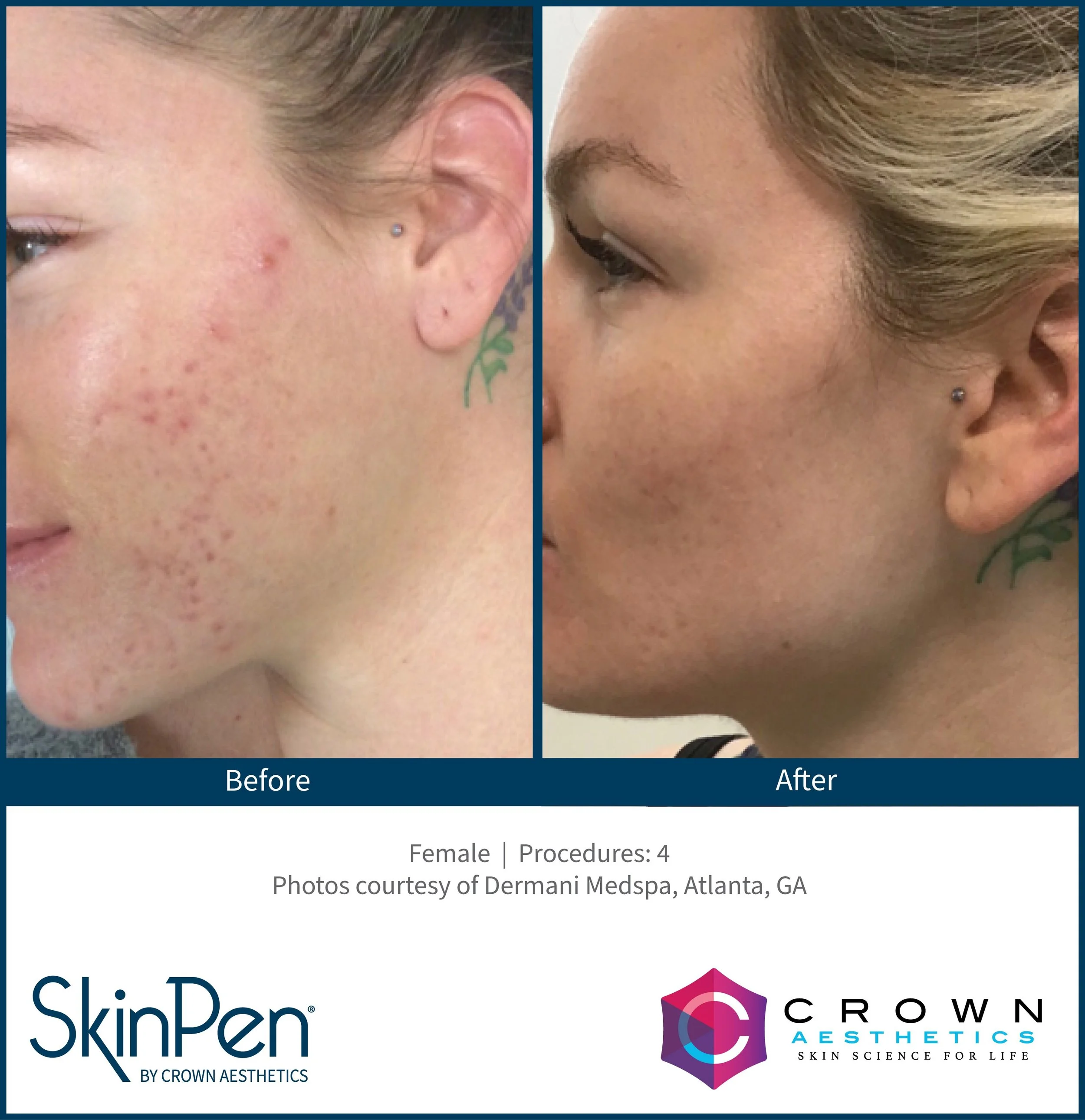
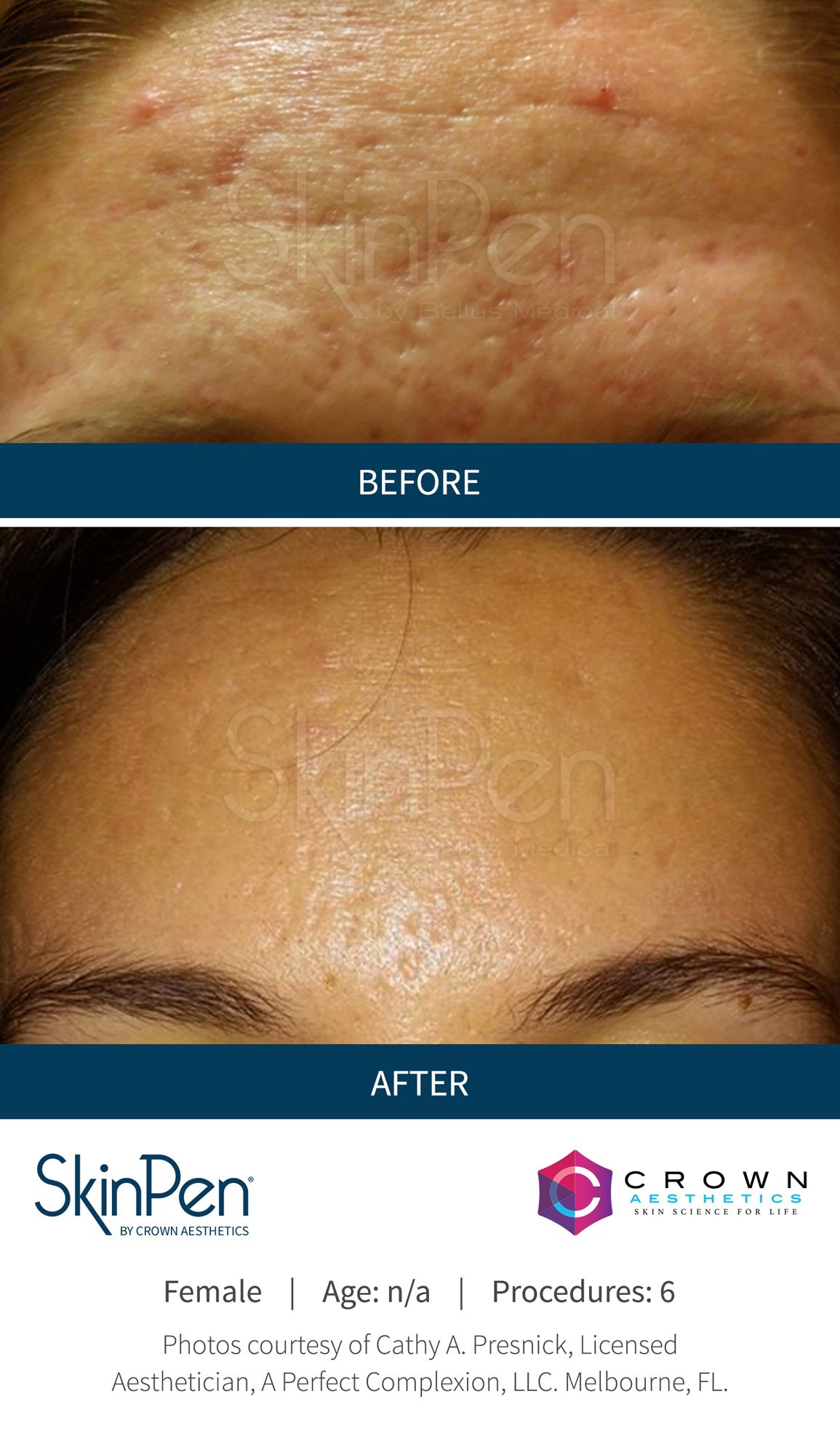
As a specialist aesthetician, I aim to be your trusted resource. I rely on SkinPen Precision microneedling to treat acne scarring because it is a safe, controlled and clinical approach to skin remodelling. However, scars are not a one-session fix. Here is a transparent look at how this treatment works and what you can realistically expect.
😩 Understanding Scars: The Difference Between Texture and Tone
Acne often leaves behind two main types of scaring. SkinPen Microneedling is a powerful solution that benefits both categories over a course of treatments. It is important to identify the type of scarring you have, as this will directly impact how many sessions may be needed.
1. Textural Scars (The Depressions)
These are permanent changes to the skin's surface and structure. Textural scarring is caused when cystic acne lesions damage the collagen fibres deep in the skin. The fibres which were originally neatly and tightly woven together, become stretched and damaged when the skin around acne becomes inflamed and swollen. When the inflammation reduces the collagen fibres will still be stretched and fractured in places causing them to heal in a non-uniform fashion. This will create textural changes on the surface.. There are three common types of textural scarring from acne:
Boxcar Scars: Wide, shallow depressions with sharp, defined edges.
Rolling Scars: Broader depressions with sloped edges.
Ice Pick Scars: Narrow, deep, V-shaped pits.
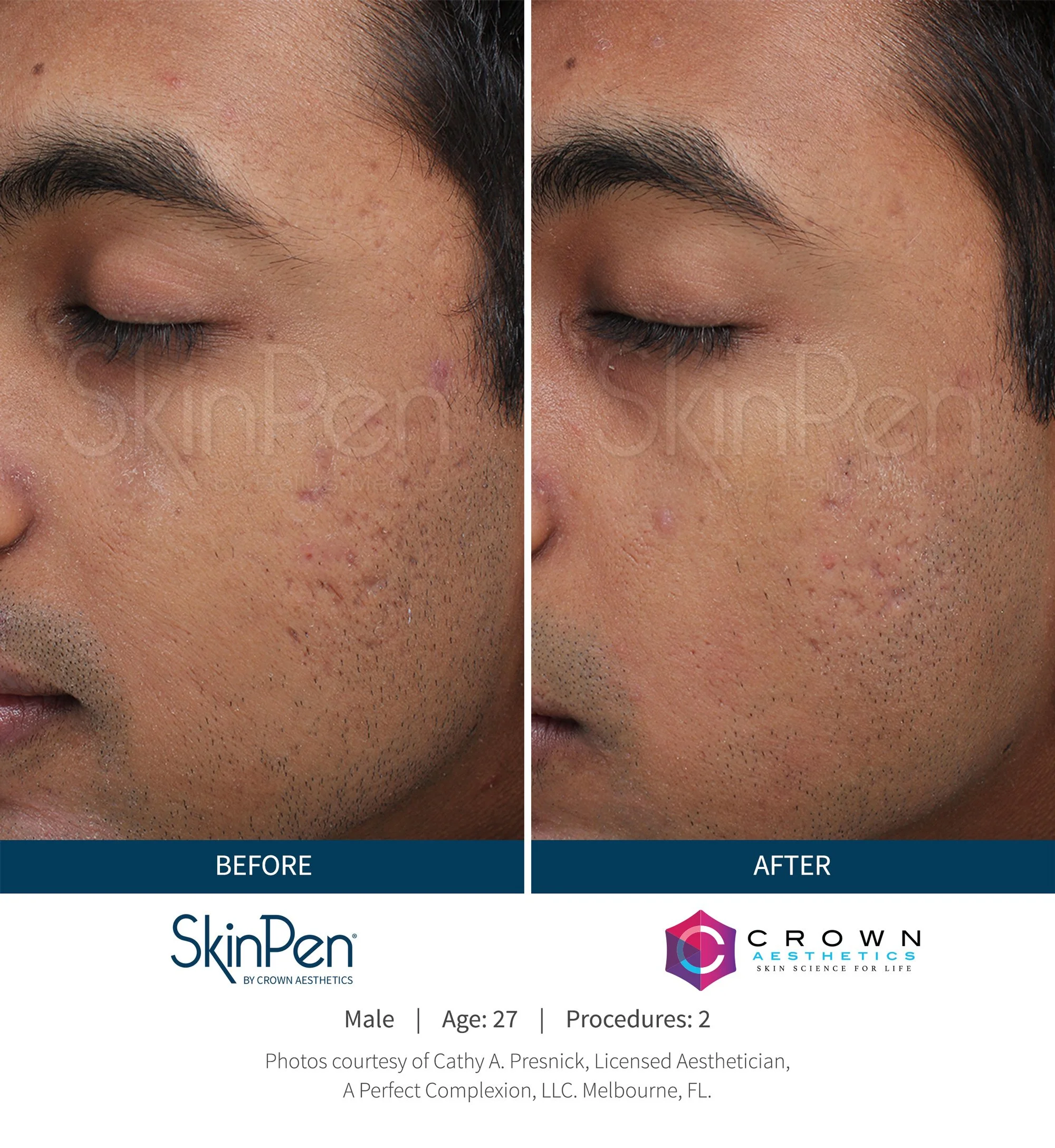
The goal of microneedling here is to break down the damaged collagen fibres through a controlled trauma. This results in the formation of new collagen fibres in the area that will replace the old damaged fibres and heal in a uniform fashion.
Textural scarring will require a minimum of 3-6 treatments as a baseline. In cases of severe scarring individuals may start with a course of 6 monthly sessions and then have ongoing top up sessions every 3-6 months until the desired result is achieved. Homecare containing retinoids or growth factors will often be recommended to optimise results.
2. Discoloration (The Red or Brown Marks)
Some people will find that although acne doesn’t change the texture of their skin, they are often left with pinkish/purplish or brown marks on the skin following a breakout. This type of scarring is not permanent and does eventually heal itself but this process can sometimes take years, SkinPen microneedling helps to speed that process up. There are two types of post inflammatory discolouration:
Post-Inflammatory Erythema (PIE): Red or purple marks on the surface of the skin left behind after acne blemishes. The inflammation and swelling from the acne damages small blood vessels in the dermis layer of the skin. Most common in pale skin types. Because PIE is due to damage in the dermis, the surface of the skin (epidermis) will remain smooth without changes to texture. The skin will work to heal the damage in the dermis layer over time so as this happens the marks will naturally fade away but this process can sometimes take years. SkinPen microneedling will help to speed up the healing process and fade the marks faster.
Post-Inflammatory Hyperpigmentation (PIH): Brown or dark spots caused by excess melanin production. Most common in darker skin types. When the skin becomes inflamed from acne, the melanocytes (pigment producing cells) detect this as an injury, in an effort to help protect the skin they will produce excess melanin in this area. This process takes place in the epidermis or surface layer of the skin. Once the inflammation has gone the melanin production will return to regular levels. As the epidermis naturally renews itself, the old skin cells that were affected by excess melanin production will exfoliate away from the surface revealing an even tone. SkinPen microneedling can help to speed up the renewal process of the epidermis helping to remove PIH faster.
Ongoing results: SkinPen microneedling accelerates the healing and rejuvenation rate of your skin for up to two years post treatment, meaning any future occurrences of acne will be less likely to cause lingering PIH or PIE.
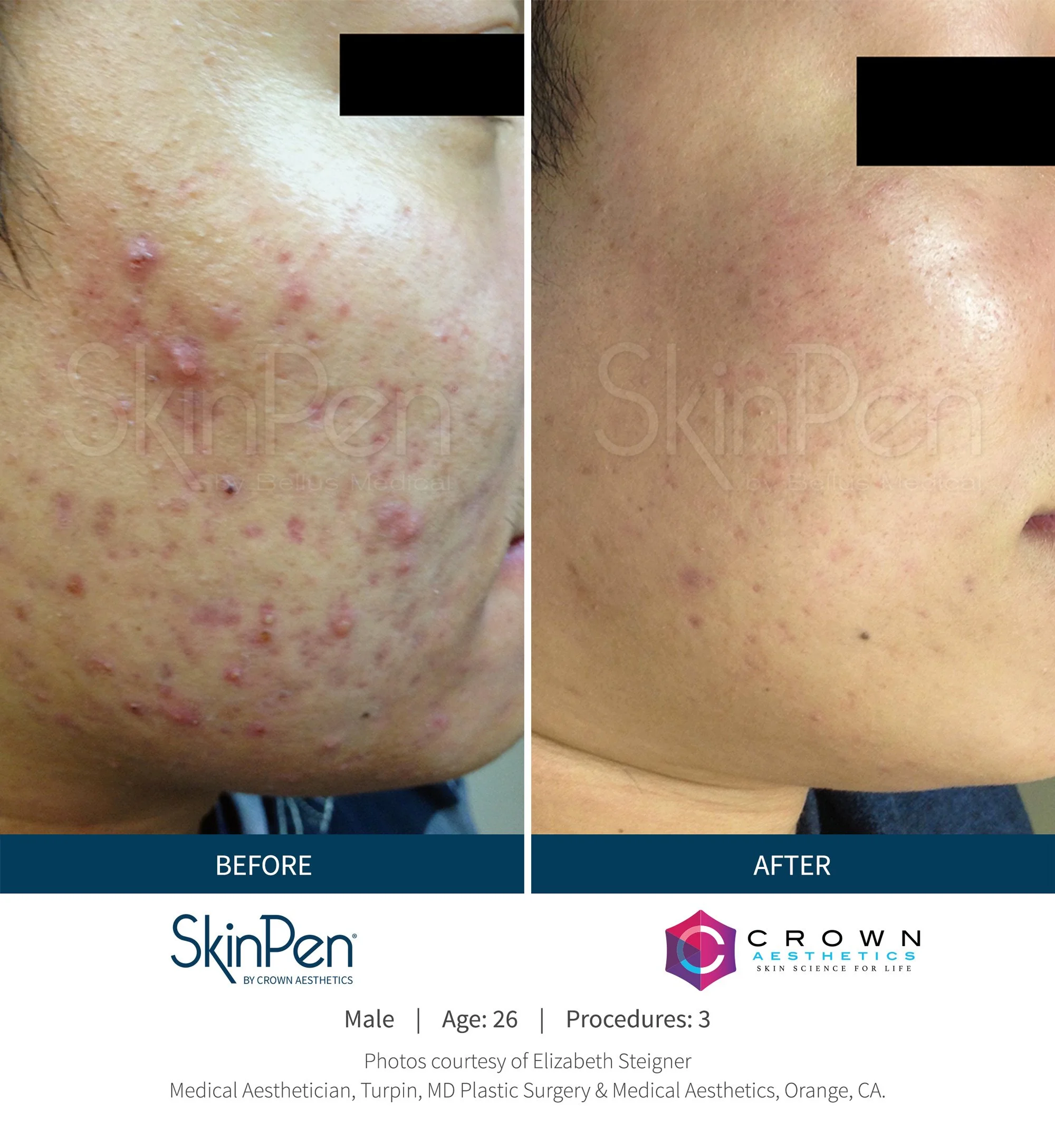
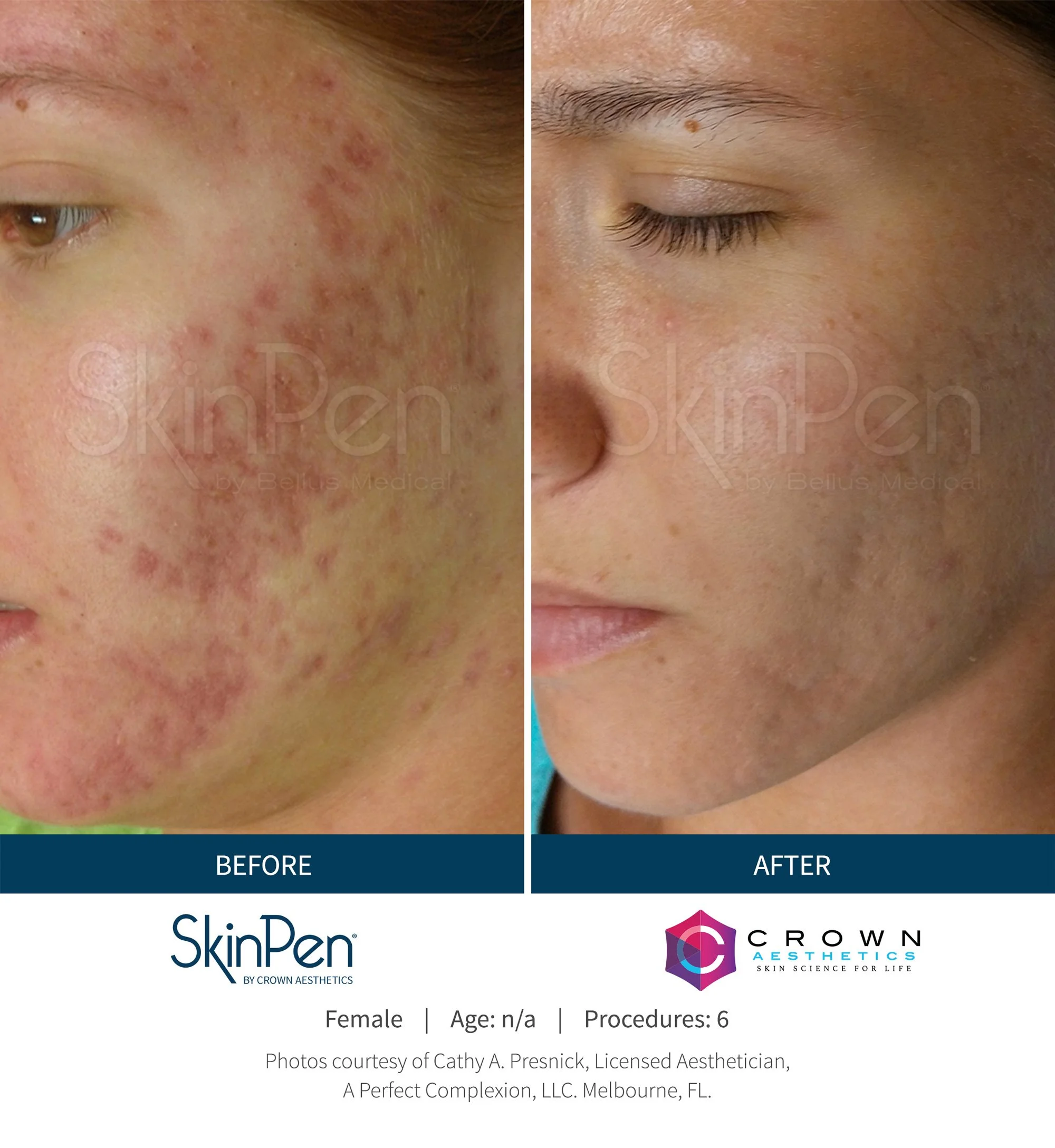
Discolouration caused by acne can often be resolved within 1-3 sessions. A homecare routine will often be recommended to optimise results and prevent recurrence of PIH or PIE. In cases of PIH it will sometimes be recommended to prep the skin with a topical tyrosine inhibitor (melanin regulator) before starting treatment.
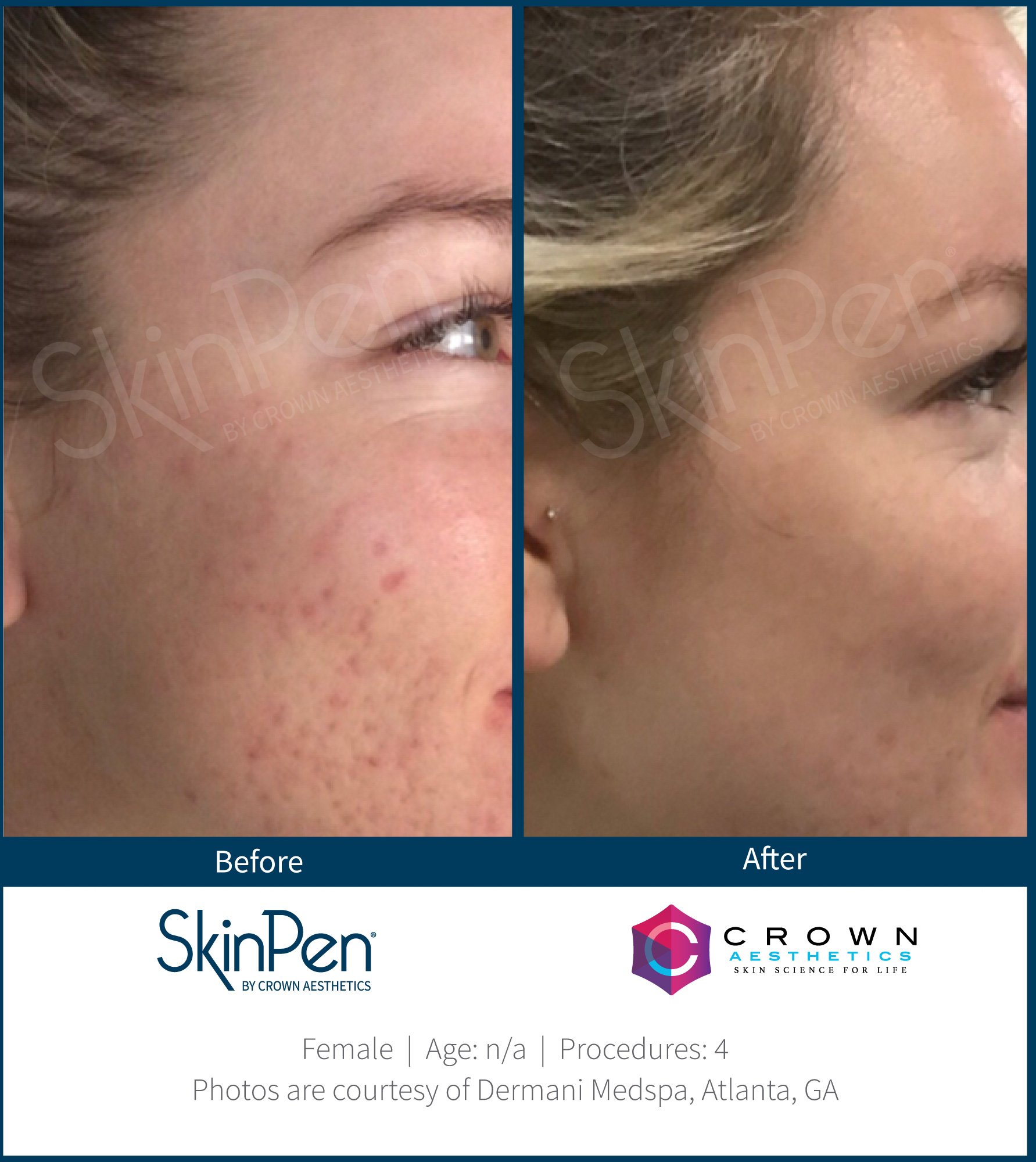
In short: SkinPen targets the fundamental structure of textural scars while accelerating the natural resolution of discoloration.
🔬 The SkinPen Solution: Controlled Remodeling for Texture and Tone
The primary goal of SkinPen treatment is controlled collagen induction therapy. We are deliberately creating micro-injuries in the scarred tissue to trigger the body’s natural healing response.
How SkinPen Works for Scars:
Breaking Up Old Tissue: The fine needles of the SkinPen device mechanically break up the dense, disordered collagen that forms the scar tissue.
Generating New Collagen: This controlled process triggers the production of new, healthy, uniform collagen and elastin. This fresh structural support helps to 'plump up' the depressions and smooth the skin's surface.
Correcting Tone: The accelerated cellular turnover helps to push pigmented cells to the surface, leading to a faster fading of PIH and a brighter, more even complexion over time.
Safety and Precision: Using an FDA-cleared device is crucial here. This is why I trust SkinPen, its precision and consistent motor rhythm (thanks to high-grade components) allow me, as your practitioner, to work at the exact depth needed for the scar without causing excessive inflammation or damage to the surrounding healthy skin. This controlled trauma minimizes the risk of creating new PIH, PIE or scarring. It is crucial that the trauma induced through microneedling is controlled as this is what allows for uniform healing and repair. After all, it was an uncontrolled trauma (the acne & inflammation) that caused the scarring in the first place, we do not want to recreate this.
⚖️ Setting Realistic Expectations: Microneedling vs. Laser
The table below outlines the differences between SkinPen and Laser resurfacing, scroll across for mobile users.
The Bottom Line: SkinPen offers a safer and methodical journey to achieving long-term, structural improvement, making it a reliable choice for managing both texture and tone concerns, especially for those with skin prone to pigmentation.
🗓️ Your Scar Revision Journey in Bristol
Acne scar revision is a process that requires patience and commitment. The "best treatment for acne scar removal" doesn't mean instantaneous removal; it means the most effective long-term remodeling.
Multiple Sessions are Required: We generally recommend a course of 3 to 6 sessions, spaced approximately 4 weeks apart. This consistent schedule ensures that we continue to build new collagen and remodel the scars effectively.
Results are Progressive: You will begin to see textural and tonal improvements after each session, but the full, final results are not visible until several months after your last treatment, once the new collagen has fully matured. Rejuvenation effects can continue for up to 2 years following treatment.
Choosing Your Practitioner: Avoid unverified "groupon bristol microneedling" deals. The expertise of your aesthetician in Bristol, combined with the professional-grade SkinPen Precision, is what delivers predictable, safe results.
Read my Ultimate Guide to Microneedling linked below to learn why SkinPen are the industry leader’s for safety in microneedling.
Ready to start a responsible, honest journey to clearer skin? Book a detailed consultation today to assess your scarring and build a customised SkinPen treatment plan.